
 |
Foundation for Chinese Performing Arts
Summer FREE Concert @ NEC 2026 夏日系列音樂會 at New England Conservatory, Boston, Massachusetts Aug 6 to 22, 2026 All concerts Admission Free, suggested donation $10 at door Age 6 and under not admitted |
|
|
Olga Amelkina-Vera (b. 1976):
Manuel de Falla
(1876–1946):
|


|
|
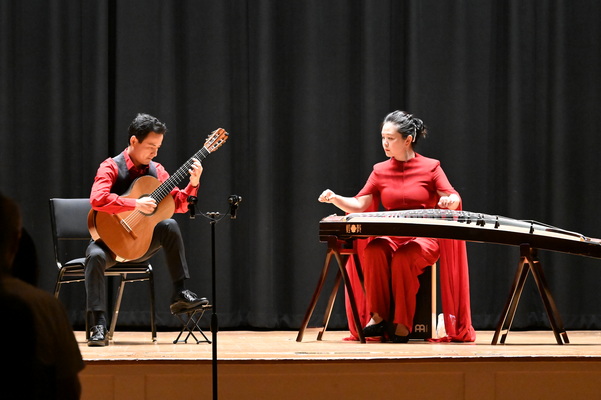
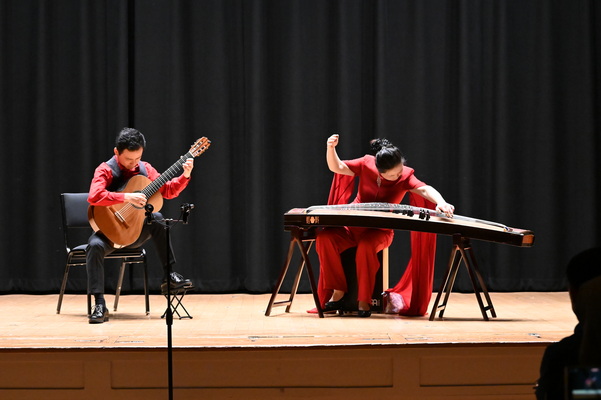
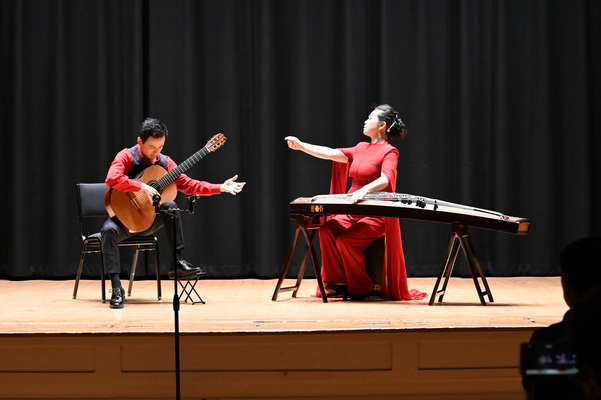
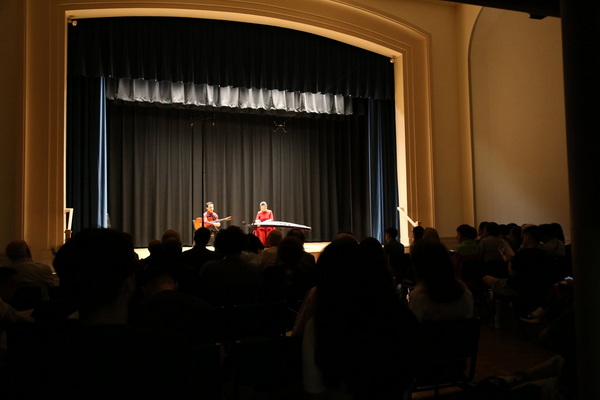
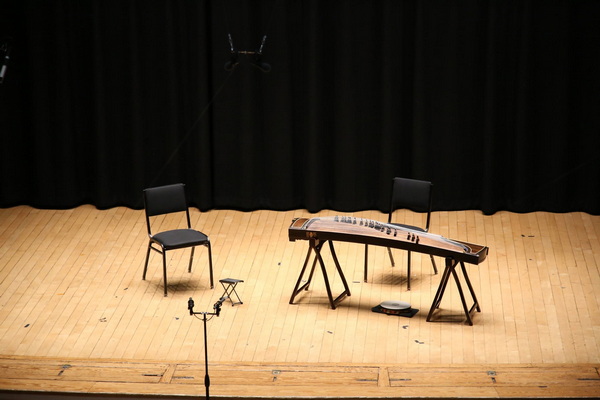
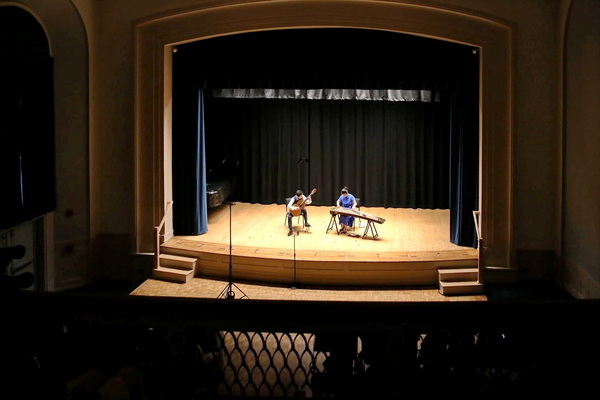
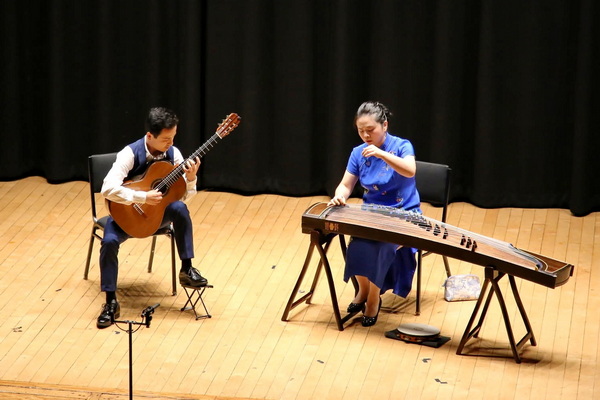
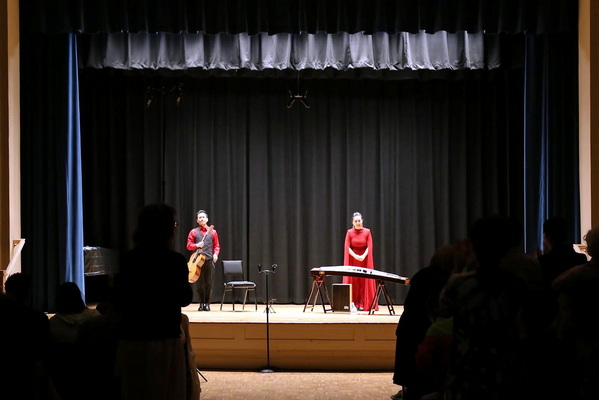
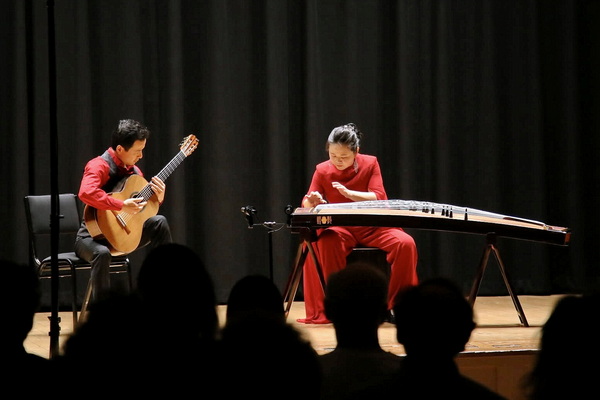
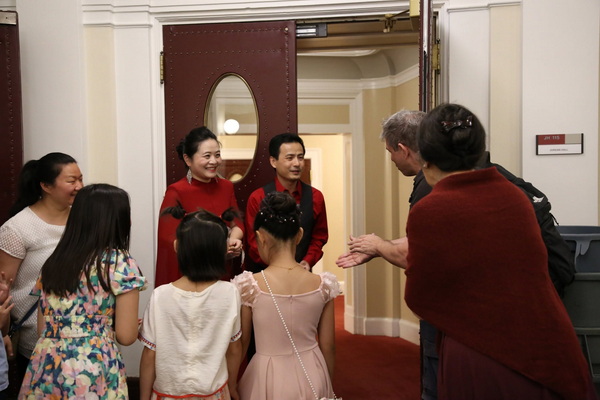
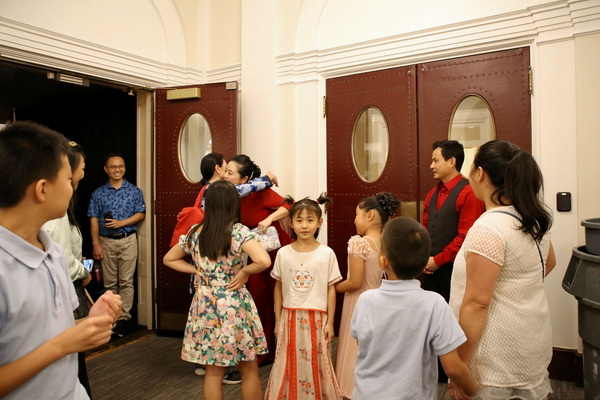
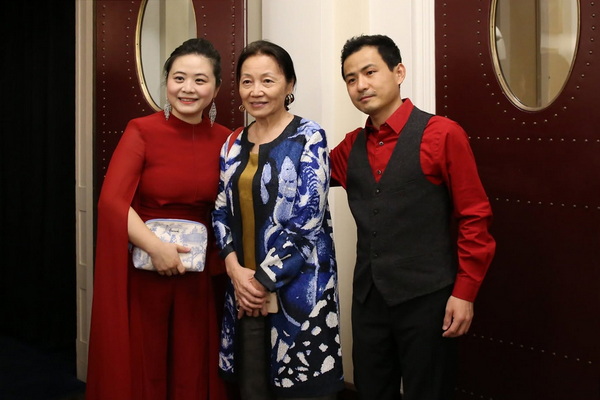
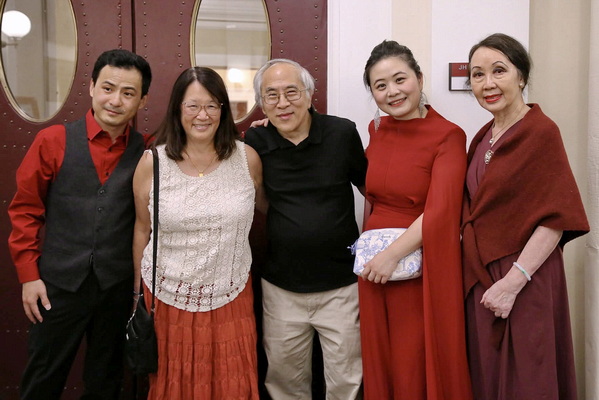
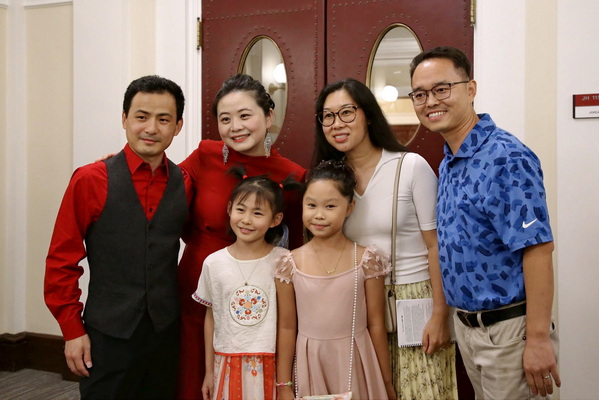
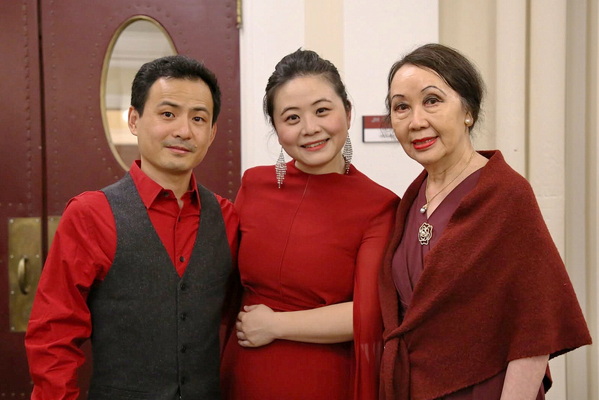
Duo Chinoiserie 東風二重奏
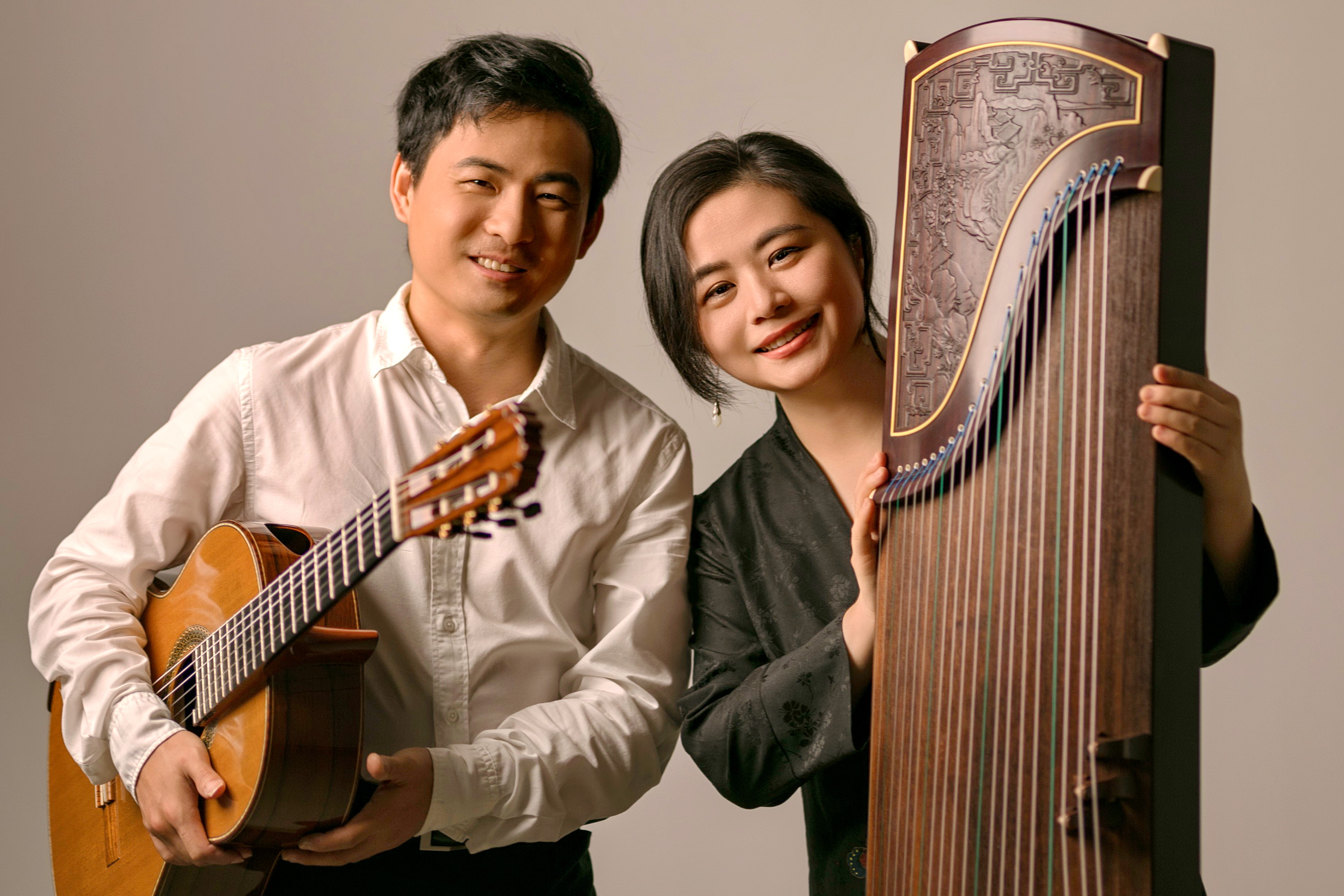
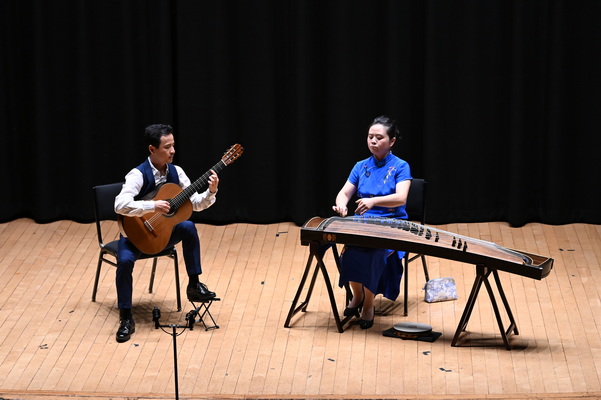
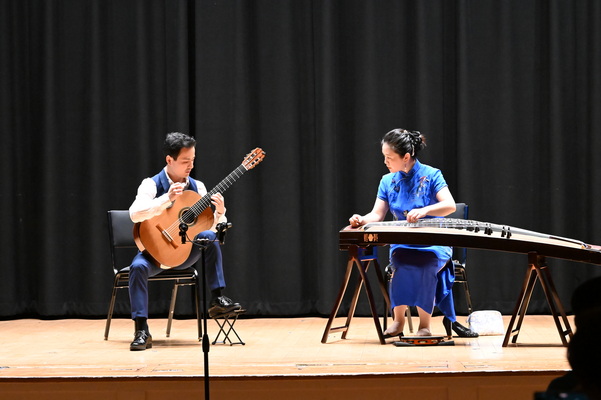
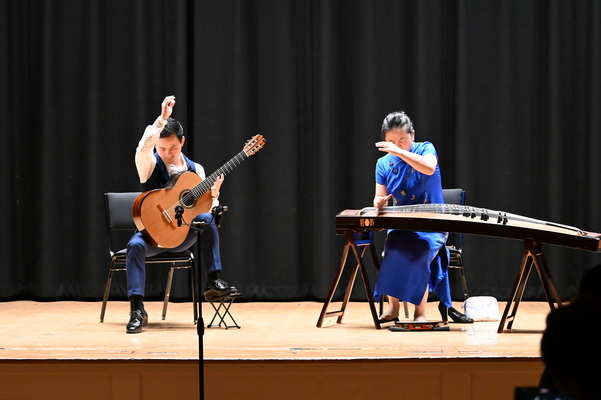
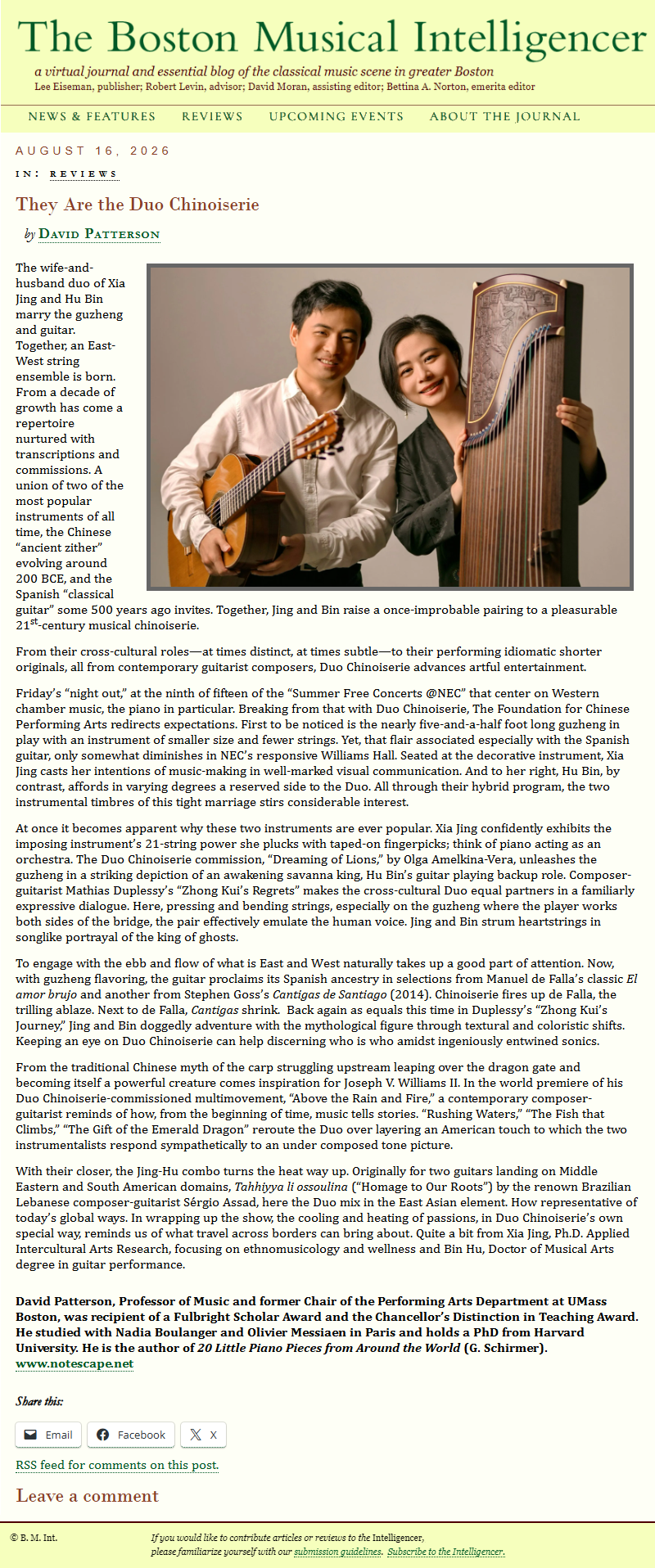
Founded in 2016, Duo Chinoiserie has emerged as an unparalleled musical phenomenon, captivating audiences with their transcendent performances. Spearheaded by the exceptional talents of Chinese guzheng virtuoso Xia Jing and classical guitarist Hu Bin, this duo comprises two highly accomplished musicians who have attained unrivaled acclaim in their professional fields.
Critics and audiences alike have been captivated by Duo Chinoiserie's awe-inspiring performances. Grammy winning guitarist David Russell praises their work as a "moving and impressive combination" that showcases their mastery, profound musicality, and attractive phrasing of melodies. With their resolute global vision, Duo Chinoiserie magnificently weaves together the elegance of the Chinoiserie style, seamlessly blending Eastern and Western cultures through their extraordinary musical interpretations. Their meticulously curated repertoire, boldly handpicked, explores the enchanting dialogue and complementary textures of their instruments, uniting contrasting musical styles into a cohesive and well-defined whole.
Having graced illustrious international stages, Duo Chinoiserie maintains an active concert schedule, enthralling audiences with their sensational performances. They have been proudly presented by esteemed presenters such as the Omni Foundation for the Performing Arts, Arizona Arts Live, Arizona Friends of Chamber Music, Cleveland Classical Guitar Society, Austin Classical Guitar, Tidewater Classical Guitar, and many others. Their recent highlights include the world premiere of a double concerto at Carnegie Hall and a collaboration with Ballet Tucson on an original ballet production titled Queen Himiko. In recognition of their immense talent and creative artistry, Duo Chinoiserie has garnered widespread media attention, with mainstream outlets such as the Arizona Daily Star and Tucson Lifestyle Magazine highlighting their captivating endeavors. Their award-winning debut album, "Chinoiserie: Building New Musical Bridges," released by Navona Records, has received high praise from music critics worldwide, acclaimed as "the most engaging anthology showcasing artistry at the highest level."
Embracing a boundless passion for innovation and the exploration of new
musical forms, Duo Chinoiserie warmly welcomes collaborations that
seamlessly integrate chamber music into other creative realms of performing
arts. Their visionary spirit continues to reshape the landscape of
contemporary music, captivating audiences worldwide with their extraordinary
talent and unwavering dedication to artistic excellence.
Xia Jing
夏菁,
guzheng
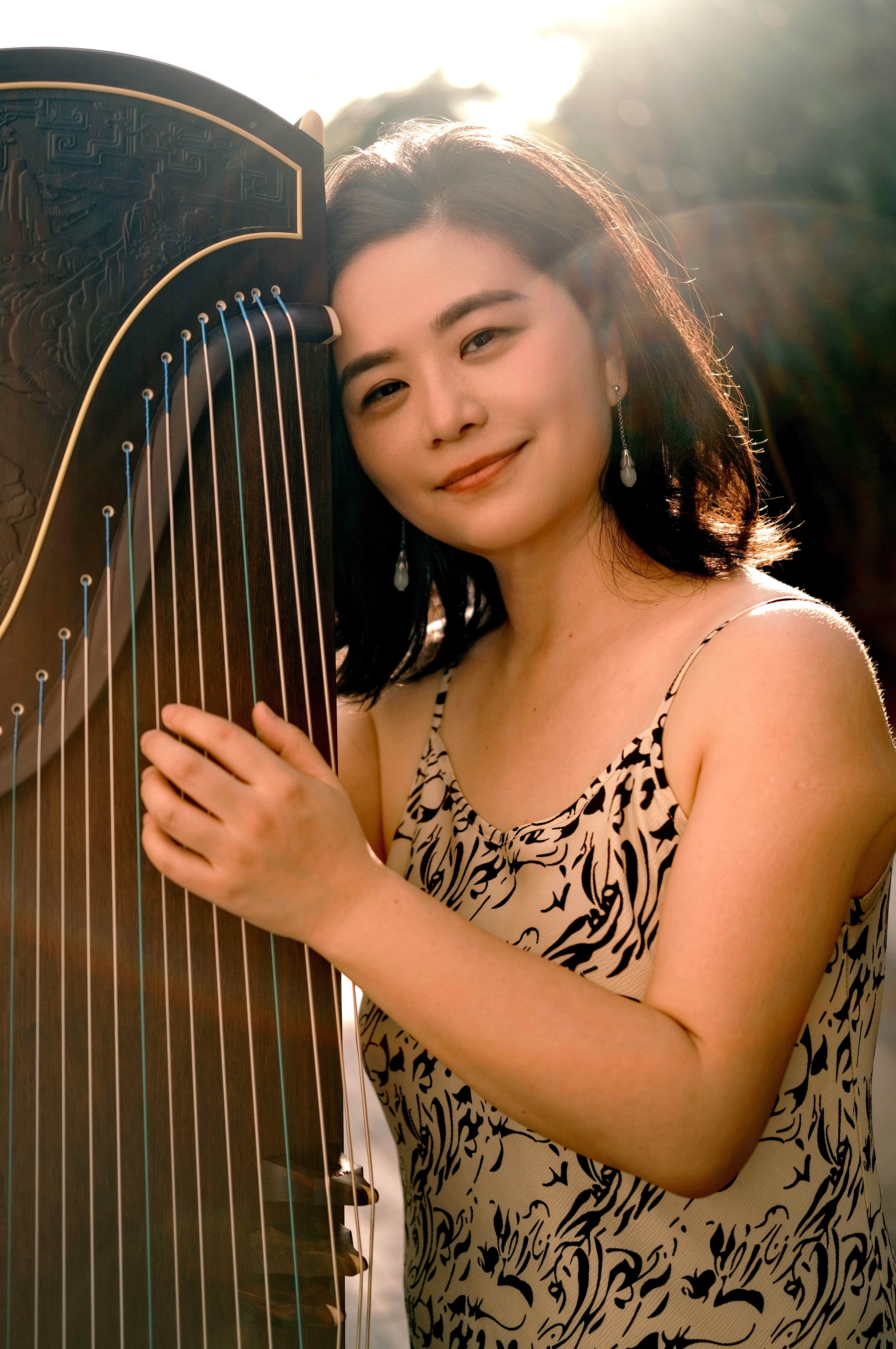 Dr. Xia is a guzheng performer, scholar, and educator specializing in
Chinese music, intercultural collaboration, and the arts in health. A member
of the Chinese Musicians Association and visiting professor at the Bard
US-China Music Institute, she bridges traditional artistry and contemporary
research through performance and scholarship.
Dr. Xia is a guzheng performer, scholar, and educator specializing in
Chinese music, intercultural collaboration, and the arts in health. A member
of the Chinese Musicians Association and visiting professor at the Bard
US-China Music Institute, she bridges traditional artistry and contemporary
research through performance and scholarship.
Her artistry and contributions have been recognized with numerous honors, including the Golden Bell Award—China’s most prestigious music award—the Master of Chinese Traditional Musical Instrument distinction from the California State Senate, the Master Artist Award from the Southwest Folklife Alliance, and the 30 Selected Leaders for the Future by the All American Chinese Youth Federation.
As a performing artist, Dr. Xia has toured internationally across Switzerland, New Zealand, Spain, Malaysia, Japan, South Korea, Myanmar, Bangladesh, and the United States, appearing as concerto soloist with renowned orchestras including the Vienna Symphony Orchestra, Beijing Symphony Orchestra, China National Traditional Orchestra, and Tucson Symphony Orchestra. Her performances and artistic initiatives have been featured by the UK Chinese Journal, Radio New Zealand, NZ Herald, Tucson Lifestyle Magazine, Arizona Public Media, and other international outlets.
Deeply rooted in the guzheng’s classical tradition, Dr. Xia is equally passionate about exploring new sounds, techniques, and cross-cultural expressions. Her performing style—at once tranquil and powerful—reveals the instrument’s vast emotional range, inviting listeners to experience the beauty of nature, the vitality of life, and the light of humanity.
Beginning her guzheng studies at the age of four, Dr. Xia trained under
leading Chinese masters and earned her bachelor’s and master’s degrees from
the China Conservatory of Music. She later completed her Ph.D. in Applied
Intercultural Arts Research at the University of Arizona, where her work
focuses on the intersections of music, culture, and wellbeing. Her scholarly
contributions include publications with the Society for Ethnomusicology (SEM)
and presentations at the Association for Chinese Music Research (ACMR), the
International Council for Traditional Music and Dance (ICTMD), and the
National Organization for Arts in Health (NOAH).
Hu Bin
胡濱,
guitar
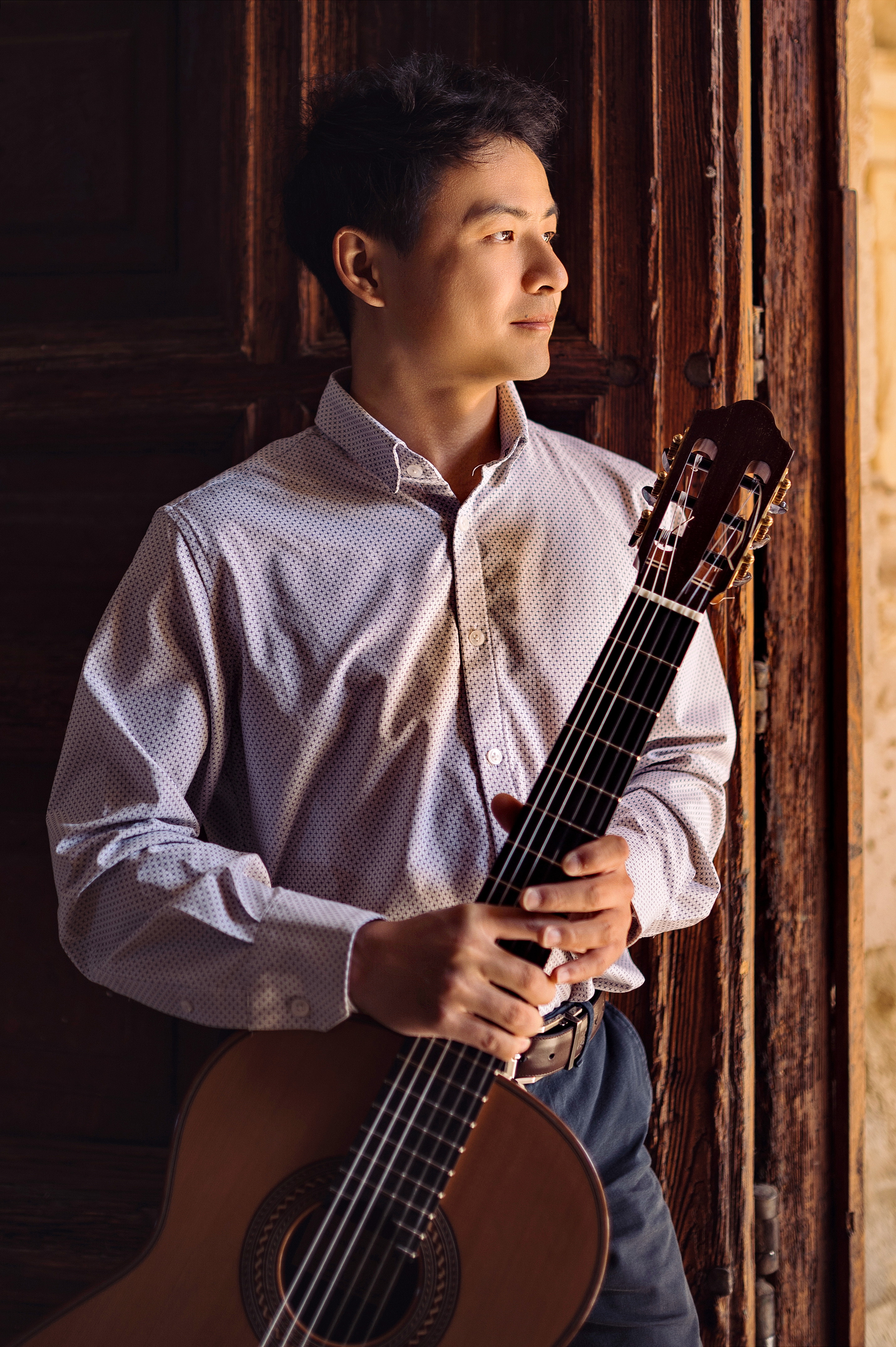 Dr. Hu has captivated audiences across continents, performing in Austria,
China, Denmark, Estonia, Finland, Indonesia, Italy, Malaysia, the
Philippines, Spain, and the United States. A versatile artist, he has
appeared as a soloist, chamber musician, and concerto soloist, leaving a
lasting impression on stages around the world.
Dr. Hu has captivated audiences across continents, performing in Austria,
China, Denmark, Estonia, Finland, Indonesia, Italy, Malaysia, the
Philippines, Spain, and the United States. A versatile artist, he has
appeared as a soloist, chamber musician, and concerto soloist, leaving a
lasting impression on stages around the world.
Earning international recognition, Dr. Hu was awarded first prize at the 2016 David Russell Bach Prize, a distinction personally conferred by GRAMMY Award–winning guitarist David Russell. The honor affirmed his reputation as an outstanding Bach interpreter, known for bringing fresh insights into the works of the great composer. His acclaimed all-Bach album, Ciaccona—released by Eudora Records in Spain—has been praised by critics for its expressive insight and sonic beauty, establishing him as one of today’s foremost voices in the art of Bach interpretation on the classical guitar.
Beyond performance, Dr. Hu is a devoted scholar and educator. He has been invited to teach and lecture at conservatories and conferences around the world, sharing his expertise in Baroque performance practice on the guitar. A former guest lecturer at the Guitar Foundation of America International Convention, he has also contributed to the Soundboard magazine. His students—some as young as nine—have achieved success in international competitions, reflecting his effective pedagogical approach and commitment to inspiring and nurturing the next generation of musicians.
Dr. Hu earned his Master of Arts with distinction from the Universität Mozarteum Salzburg, studying under Marco Tamayo, and completed his Doctor of Musical Arts at the University of Arizona under Thomas Patterson. His artistic development has also been influenced by luminaries such as Sérgio and Odair Assad, David Russell, René Izquierdo, Eliot Fisk, and Ricardo Gallén.

Duo Chinoiserie
東風二重奏
The boom in trade between Europe and East Asia in the 17th- and 18th- centuries allowed an exchange of economic and cultural commodities. Within this historical context, the style of Chinoiserie emerged, representing the European fantasy of East Asian cultures at a time when international travel was not common. Inspired by it, Duo Chinoiserie is a unique pairing that combines the Chinese guzheng and the European classical guitar. This duo reproduces the elegance of the Chinoiserie style and brings the best of Eastern and Western culture together through music. The texturing, combination, and dialogue between both instruments is displayed in this concert through a careful musical selection, exploring the emotional depth that binds classical compositions with global music. Boldly, the program includes new arrangements of well known classical works by de Falla, a transcription of a work by Goss, and a new set of works by Assad, Duplessy, and Amelkina-Vera. The new compositions both explore and solidify the new instrumental pairing, establishing a new repertoire canon.
Dreaming of Lions | Olga Amelkina-Vera (b.1976)
Commissioned by Duo Chinoiserie in 2024, with support from Arizona Commission on the Arts, the work was inspired by the 32,000-year-old cave paintings from the Chauvet Cave in Southern France, especially as described in Werner Herzog’s documentary film “Cave of Forgotten Dreams.”
Selections from Cantigas de Santiago | Stephen Goss (b. 1964)
This multi-movement work was written in 2015 for solo guitar after the title’s eponym, the Camino de Santiago, which is a pilgrimage route that leads to the cathedral of Santiago de Compostela in Galicia, Spain. It was commissioned by and dedicated to classical guitarist David Russell and his wife María Jesus, “who live close to the camino and have walked it many times.” Like the dedicatees, Duo Chinoiserie also has a personal connection to the Camino de Santiago, having embarked on the journey in 2016. Goss describes the work as “a modern reworking of medieval music associated with the Camino,” because each of the seven movements draws on musical material from medieval sources.
Selections from El amor brujo | Manuel de Falla (1876–1946)
In 1915, de Falla conceived El Amor Brujo as a gitanería for flamenco dancer and singer Pastora Imperio and her Flamenco company. Here, Duo Chinoiserie presents a vignette of three selections in an arrangement that employs both the flamenco guitar’s idiosyncratic language and the guzheng’s wide array of colors combined with pitch bending to allude to the story’s characters. In “Danza del terror,” the guzheng becomes instrumental in conveying the feeling of terror with its ability to add mobility and flexibility to each note combined with de Falla’s brusk dynamic changes. In “El circulo mágico,” the conversation between the guzheng and guitar unfolds like a love story — intimate, lyrical, and restrained by invisible boundaries. The piece evokes tenderness and yearning through shimmering timbres and interwoven melodies. Finally, in “Danza ritual del fuego,” the guzheng and the guitar majestically come together; the guzheng using yáo zhǐ (tremolo) and zuò yùn (string bending) to bring out the storyline’s primitive and spiritual character and the guitar using its technical capabilities to support, accompany, and lead when necessary.
Zhong Kui’s Regrets and Zhong Kui’s Journey | Mathias Duplessy (b. 1972)
Both of these newly commissioned works are inspired by the tragic story of Zhong Kui, a character from Chinese mythology known as a demon hunter and the king of ghosts who is depicted in traditional paintings and art. Although Zhong Kui is a deity, who is still honored in Chinese households to this day as the protector of humankind, his story is one of rejection because of his unsightly appearance, suicide, and the unique bestowment of immortality. The following paragraph contains the composer’s brief introduction about the piece:
"The fast movement depicts Zhong Kui riding in pursuit of demons like a Chinese Western… Adventure, humor, fights and heroism! For the slow movement, on the other hand, I imagined the character at rest, nostalgic, immersed in the reverie of a love lost during his first life. In this movement, my French compositional style is more present in the harmonies and the form with Ravelian tonalities and Debussy-like chords resonating with romantic lyricism. Finally, in the fast movement, it is the guzheng that has the beautiful part because of its mad virtuosity, which contrasts with the slow movement, since it is the guitar which sings from the bottom of the Chinese mountains."
Tahhiyya Li Ossoulina | Sérgio Assad (b. 1952)
Tahhiyya Li Ossoulina, which translates from the Arabic as “Homage to Our Roots,” is based on Middle Eastern modes. This piece was conceived as a tribute to the composer’s grandparents, who immigrated to Brazil from Lebanon in 1895. The descendents of the first Lebanese immigrants today number as many as six million people in Brazil and have contributed greatly to the country’s development in many areas. First recorded by the Assad Brothers on their 2007 album Jardim Abandonado (Nonesuch Records), the work was nominated for a Latin Grammy Award for Best Musical Composition. In Duo Chinoiserie’s arrangement, the guzheng and guitar capture the mythic spirit of the Middle East while revealing the intricate threads of cultural exchange that have long connected the Eurasian continent.
十七、十八世纪欧洲与东亚之间日益频繁的贸易往来促进了经济与文化的交流,也使得中式美学在欧洲风靡一时。Chinoiserie(中国风)来自于法语,是欧洲人对以中国为代表的远东艺术风格的理解与幻想,是中西文化与想象力融合的结晶。东风二重奏结合了中国的古筝与欧洲的古典吉他,创造了一个充满灵感与想象力的音乐新组合。二重奏用音乐重新诠释了“Chinoiserie”的优雅风格,将东西方文化的精华融合在一起。这场音乐会曲目包括两位音乐家改编的法雅与高斯的作品,还将演奏格莱美奖获得者阿萨德、世界音乐鬼才杜普雷西、新生代作曲家阿美尔金娜·维拉为二重奏创作的新作品。这些精心挑选的作品突破了两件乐器的传统表现形式,以全新的视角展现了东方与西方、古典音乐与世界音乐之间的对话和融合之美,创建了一个古筝与吉他的曲目范本。
《古洞狮梦》|阿美金娜•维拉 (1976生)
这首曲子的灵感来自一幅三万两千年前的洞穴壁画。这个位于法国南部的‘’肖位‘’洞穴被考古学家称为“被遗忘的梦”,里面包含了以这幅狮子壁画为代表的大量的珍贵壁画。壁画中描绘的狮群栩栩如生,仿佛把人们带回了远古时代。
《圣地亚哥的颂歌》选段|史蒂芬·高斯(1964生)
这部作品是威尔士作曲家史蒂芬·高斯于2015年献给大卫·罗素和他的妻子玛丽亚的古典吉他独奏作品,取材于圣地亚哥朝圣之路上的中世纪古抄本,由多个乐章组成。圣地亚哥之路(Camino de Santiago)是一条通往西班牙北部圣地亚哥·德·孔波斯特拉大教堂的朝圣之路。这条朝圣之路对于胡滨与夏菁来说有着非同寻常的意义。他们曾于2016年踏上这一心灵之旅,而这段经历也让两位音乐家对这部作品有了更深刻的理解。古筝与吉他这一创新的组合让古老的中世纪旋律焕发了新的活力。
《魔幻之爱》选段|玛努埃尔·德·法雅(1876–1946)
1915年,德·法雅为弗拉门戈舞者及歌唱家帕斯托拉·因佩里奥创作了吉普赛歌舞剧《魔幻之爱》。在这张专辑中,东风二重奏改编了其中三首选段,通过结合弗拉门戈吉他的语言和古筝丰富的表现力来烘托故事情节。在《恐怖之舞》中,古筝灵活多变的颤音与作品富有戏剧性的力度变化相结合,巧妙地渲染了与鬼魂共舞的场景。在《渔夫之爱》中,古筝与吉他的对话宛如一段爱情故事——亲密、抒情,却被无形的界限所束缚。作品通过闪烁的音色与交织的旋律,唤起对爱情温柔与深切的渴望。最后,在《火祭之舞》中,古筝与吉他相映生辉,构成丰富的层次与织体变化。古筝通过摇指和大幅度颤音技巧将祭祀舞蹈的原始与神秘表现得恰到好处,而吉他则用微妙的音色变化、富有野性的扫弦以及炫技的快速音阶令音乐更具张力。
《钟馗的遗憾》与《钟馗的征途》|马提亚斯·杜普雷西(1972生)
法国当代作曲家杜普雷西的《钟馗的遗憾》与《钟馗的征途》创作灵感来源于钟馗的典故传说。钟馗是中国民间传说中的驱鬼逐邪之神,民间常挂钟馗的像来辟邪除灾。 古书记载他是唐初雍州终南山人,生得豹头环眼、铁面虬鬓、相貌奇异,然而却是个才华横溢、满腹经纶的人物;平素正气浩然、刚直不阿、肝胆相照。
作曲家诗意且富有法国印象派色彩的和声奇妙地融合在《钟馗的遗憾》这一乐章中。乐曲里拉威尔式的音调、德彪西式的和弦与浪漫的抒情主义产生共鸣,流露出一种令人心碎的美感,既有内心的独白,又有对过往的留恋。乐曲从吉他的独白开始,到两件乐器的相互交替,再随着情绪的递进交织在一起,有不舍、有执着、有遗憾,但最终只能回到现实。美好的点滴被封存在回忆中,空余一声叹息……《钟馗的征途》呈现了钟馗驱邪捉鬼的情景,在展现其英雄主义精神的同时又不失幽默风趣。饱满强烈的律动贯穿全曲,使音乐充满了蓬勃的能量。作曲家不拘一格的创作思维探索了古筝与吉他全新的音响效果与演奏技法,让古老的中国传统乐器以及西方古典乐器在传承与创新的道路上焕发出新的力量。
《祖先的歌》|塞尔吉奥· 阿萨德 (1952生)
曲目标题“Tahhiyya
Li Ossoulina”在阿拉伯语里有“向我们的根致敬”之意。此曲是作曲家向其祖父母致敬而创作的一部中东风格的作品。他们于1895年从黎巴嫩移民到巴西。如今,最早一批黎巴嫩移民的后裔在巴西的人数已多达六百万。他们在多个领域为国家的发展作出了巨大贡献。此曲收录于作曲家2007年由
Nonesuch Records
发行的专辑《Jardim
Abandonado》中,并获得了当年拉丁格莱美奖“年度最佳音乐作品”的提名。东风二重奏改编的版本凸显了中东音乐的神秘色彩,同时揭示了欧亚大陆文化之间千丝万缕的联系。


Thank you for your
generous contribution to
Foundation for Chinese Performing Arts
 |
 中華表演藝術基金會 中華表演藝術基金會Foundation for Chinese Performing Arts Lincoln, Massachusetts |