| |
|
~ Program
~
Arvo Pärt (b. 1935)
:
Spiegel im
Spiegel for violin and piano
(1978)
(10 min)
Ludwig van Beethoven
(1770–1827)
:
Sonata No. 9
in A major for Violin and Piano,
Op. 47, "Kreutzer"
(1803)
I.
Adagio sostenuto – Presto
II. Andante con variazioni
III. Presto
(40 min)
Intermission
Camille Saint-Saëns
(1835–1921):
Violin
Sonata No. 1 in D minor, Op. 75
(1885)
I. Allegro
agitato
II. Adagio
III. Allegretto moderato
IV. Allegro molto
(28 min)

|
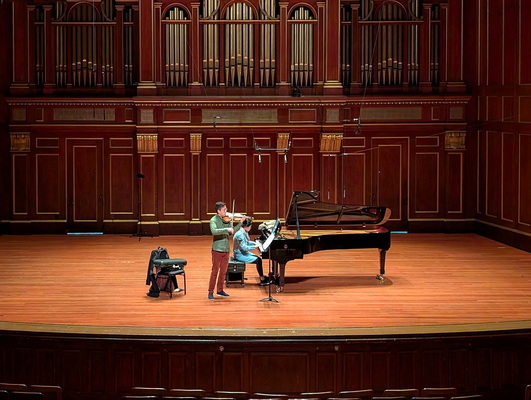
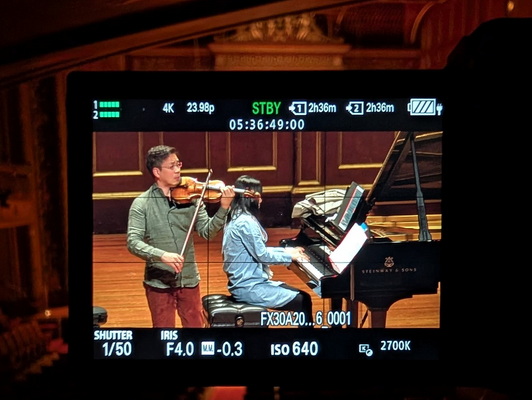
rehearsal photos: Patrick Keating
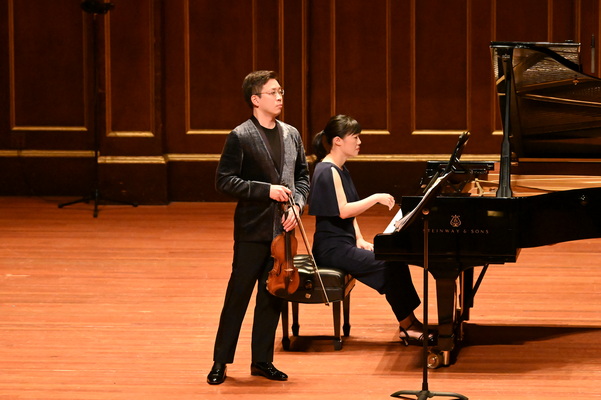
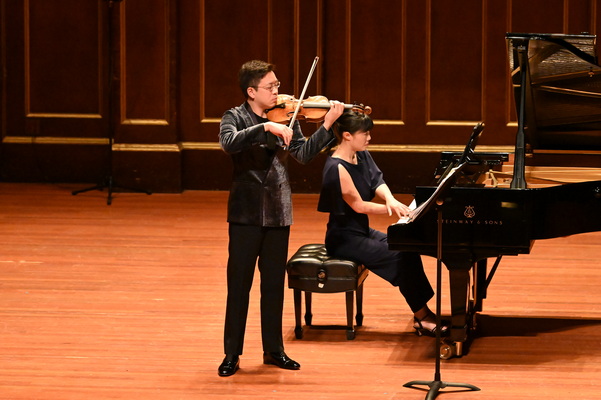
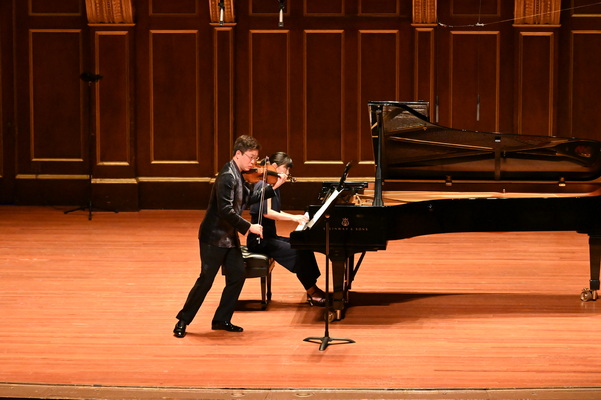
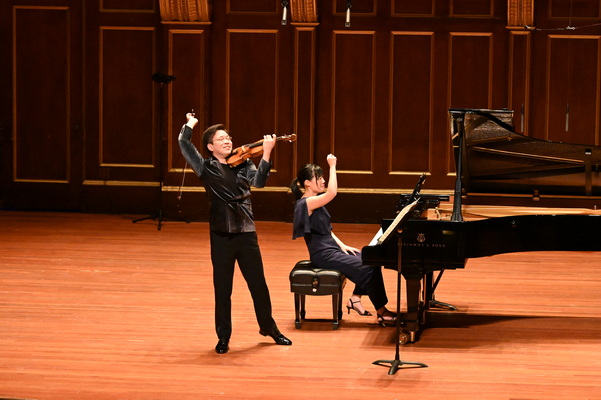
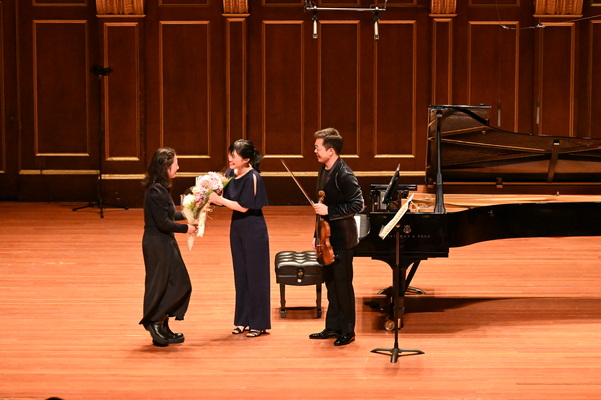
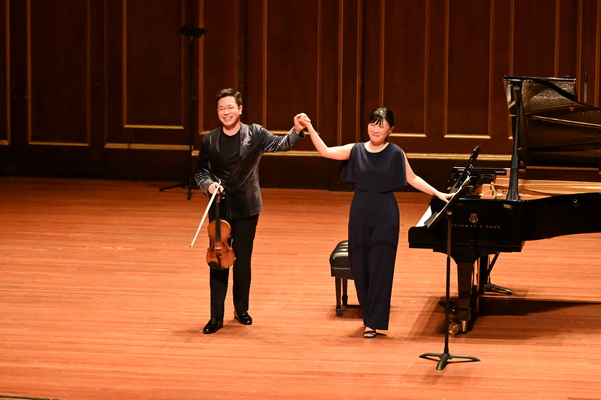
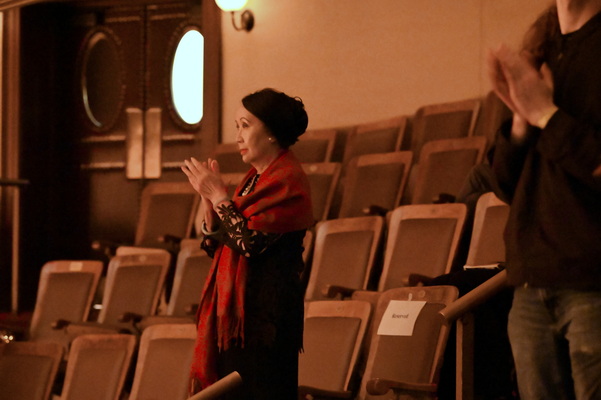
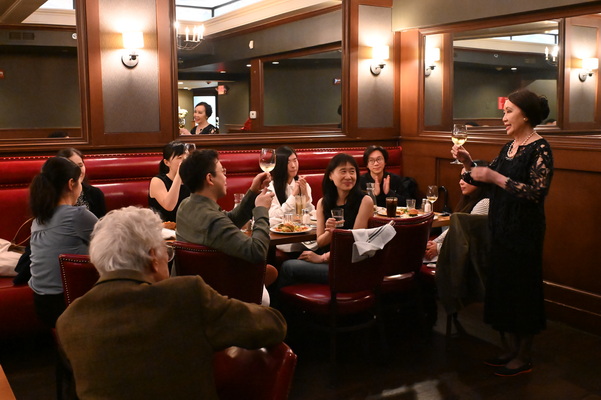
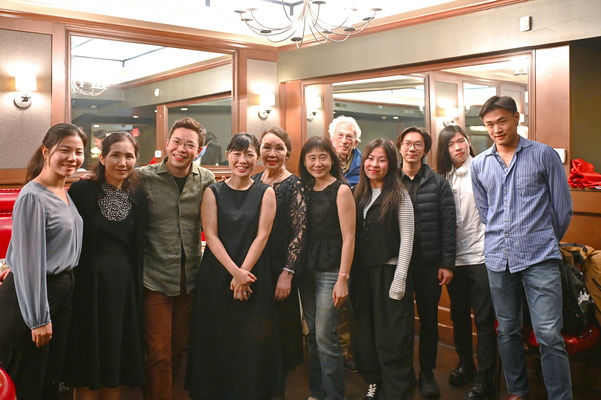
event photos: Chung Cheng
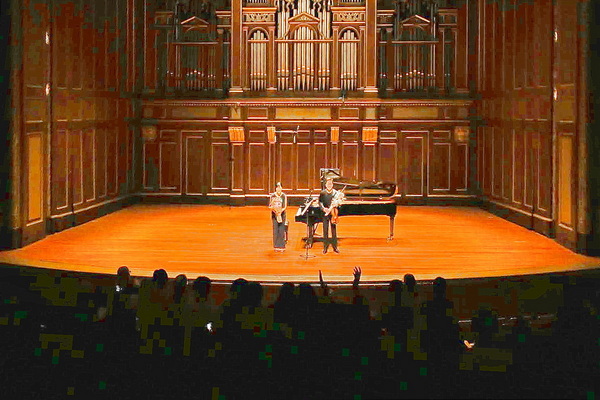
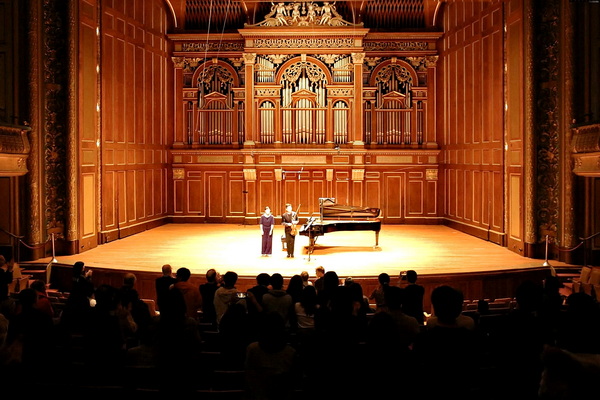
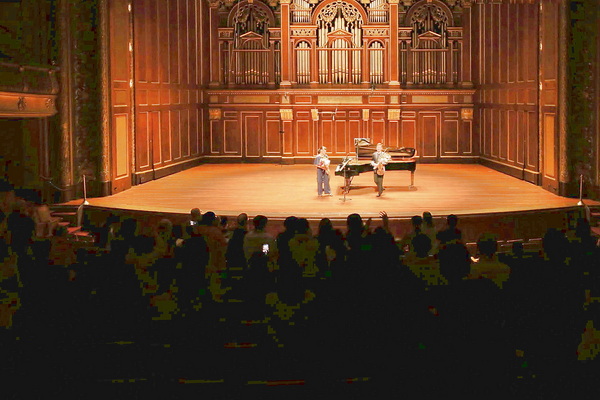 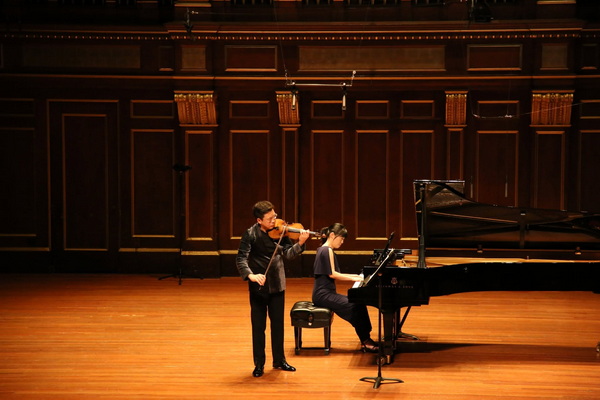
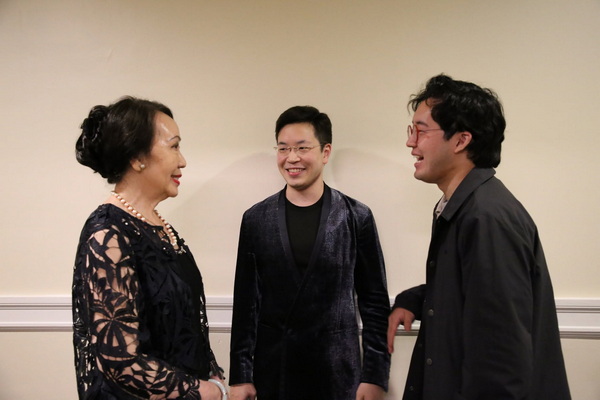
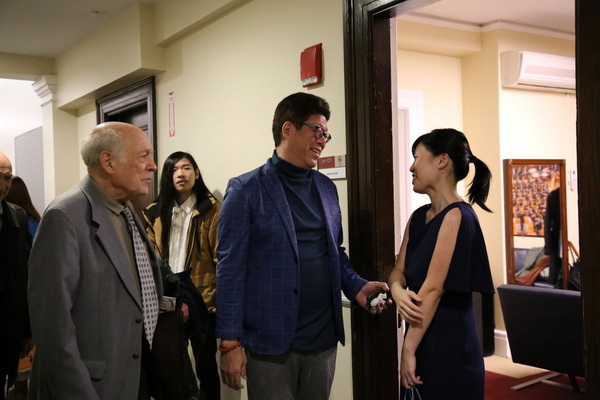
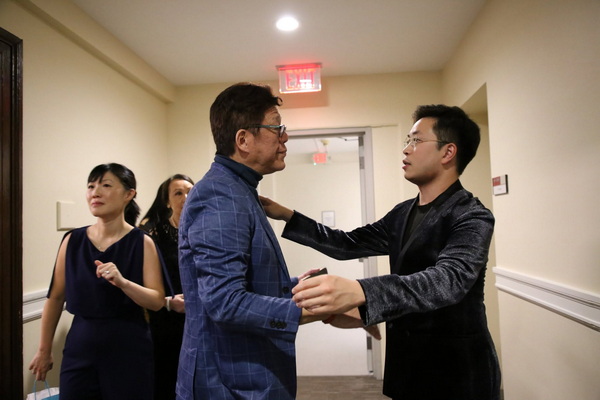
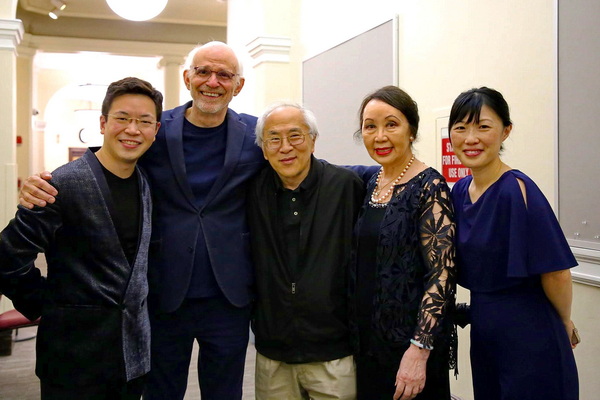
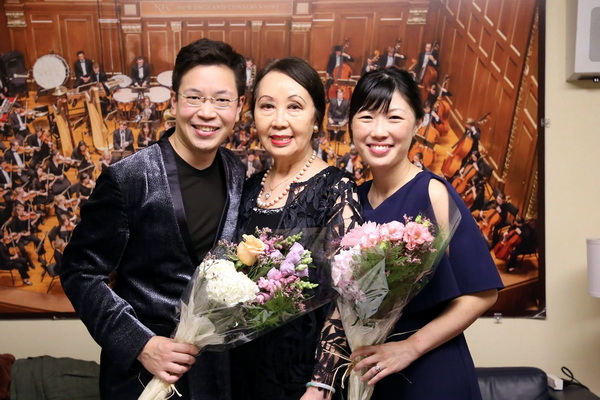
event photos: Xiaopei Xu
|
Paul Huang
黃俊文,
violin
https://www.paulhuangviolin.com/
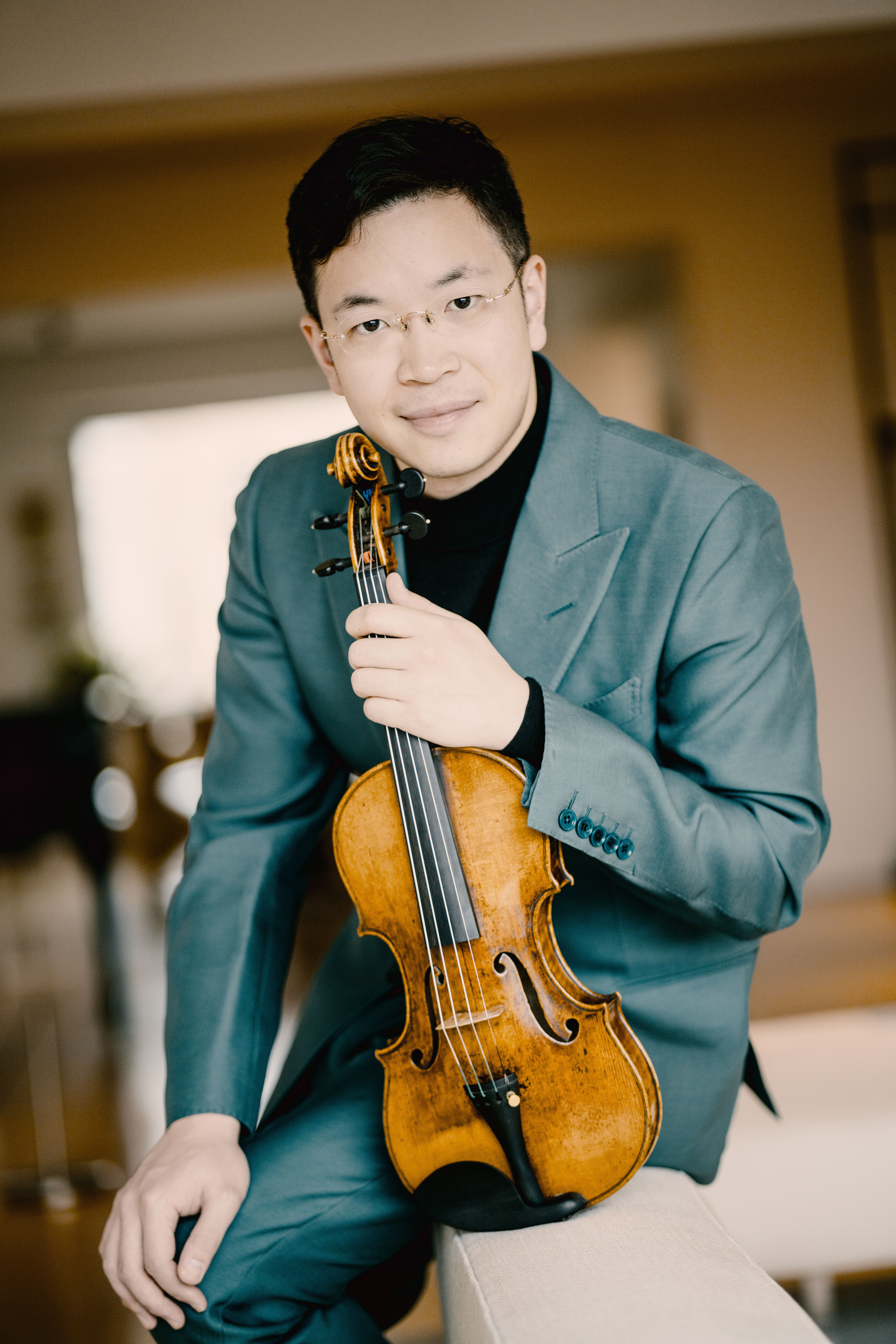
Recipient of the prestigious 2015 Avery Fisher Career
Grant and the 2017 Lincoln Center Award for Emerging Artists,
violinist Paul Huang is considered to be one of the most
distinctive artists of his generation. The Washington Post
remarked that Mr. Huang "possesses a big, luscious tone, spot-on
intonation and a technique that makes the most punishing string
phrases feel as natural as breathing," and further proclaimed
him as "an artist with the goods for a significant career"
following his recital debut at the Kennedy Center.
Known for his "unfailing attractive, golden, and
resonant tone" (The Strad), Mr. Huang's recent highlights have
included acclaim debut at Bravo!Vail Music Festival stepping in
for violinist Anne-Sophie Mutter in the Mozart’s Violin Concerto
No.4 with Chamber Orchestra Vienna-Berlin, Rotterdam
Philharmonic with Lahav Shani, BBC Symphony Orchestra with Marie
Jacquot, Detroit Symphony with Leonard Slatkin, Houston Symphony
with Andres Orozco-Estrada, NHK and Dallas Symphonies with Fabio
Luisi, Mariinsky Orchestra with Valery Gergiev, Baltimore
Symphony and Seoul Philharmonic with Markus Stenz, San Francisco
Symphony with Mei-Ann Chen, and recital debuts at the Lucerne
Festival in Switzerland and Aspen Music Festival. In Fall 2021,
Paul also became the first classical violinist to perform his
own arrangement of the National Anthem for the opening game of
the NFL at the Bank of America Stadium in Charlotte, North
Carolina to an audience of 75,000. An exclusive recording artist
with France's Naïve Records, his second album “Mirrors" was
released worldwide to critical acclaim in January of 2025 with
Gramophone Magazine remarked as "musical storytelling of such
virtuosity and conviction". June 2026 will see the release of
his third album of the Korngold and Barber's Violin Concerto
with the London Philharmonic Orchestra.
Highlights of the 2026-27 season will include Mr.
Huang's Carnegie Hall debut with Orpheus Chamber Orchestra,
subscription debut with The Cleveland Orchestra, George Enescu
Philharmonic, Singapore Symphony, China Philharmonic, Guangzhou
Symphony, Pasadena Symphony, as well as returns to Rotterdam
Philharmonic, San Francisco Symphony, Detroit Symphony,
Residentie Orkest Den Haag, Buffalo Philharmonic, Tucson
Symphony, and National Symphony Orchestra of Taiwan (both in
Taiwan and on a U.K. and Germany Tour).
2026-27 season recital, chamber music, and festival
performances will include Mr. Huang’s return to the Chamber
Music Society of Lincoln Center, Washington Performing Arts, The
Society of Four Arts in Palm Beach, and his return to the Jorden
Hall in Boston with duo partner Helen Huang. In January 2027,
Mr. Huang will launch the 5th edition of "Paul Huang & Friends"
International Chamber Music Festival in Taipei, Taiwan, in
association with the National Symphony Orchestra of Taiwan.
A dedicated advocate for contemporary music, Mr.
Huang has recorded John Harbison's solo violin work "Four Songs
of Solitute" for Harmonia Mundi, Toshio Hosokawa's Violin
Concerto No.1 "Genesis" for Naxos, and has given premieres and
champion works by Huw Watkins, Tan Dun, Lera Auerbach, Kenji
Bunch, Chris Rogerson, and Jessie Montgomery.
A frequent guest artist at music festivals worldwide,
he has performed at the Seattle, Music@Menlo, Savannah, Caramoor,
La Jolla, Santa Fe, Moritzburg, Kissinger Sommer, Sion, Orford
Musique, Miyazaki, and the PyeongChang Music Festival in South
Korea. His chamber music collaborators have included Gil Shaham,
Cho-Liang Lin, Nobuko Imai, Mischa Maisky, Jian Wang, Lynn
Harrell, Yefim Bronfman, Kirill Gerstein and Marc-Andre Hamelin.
Winner of the 2011 Young Concert Artists
International Auditions, Mr. Huang made critically acclaimed
recital debuts in New York at Lincoln Center and in Washington,
D.C. at the Kennedy Center. Other honors include First Prize at
the 2009 Tibor Varga International Violin Competition Sion-Valais
in Switzerland, the 2009 Chi-Mei Cultural Foundation Arts Award
for Taiwan’s Most Promising Young Artists, the 2013 Salon de
Virtuosi Career Grant, and the 2014 Classical Recording
Foundation Young Artist Award.
Born in Taiwan, Mr. Huang began violin lessons at the
age of seven. He is a recipient of the inaugural Kovner
Fellowship at The Juilliard School, where he earned his
Bachelor’s and Master’s degrees under Hyo Kang and I-Hao Lee. He
plays on the legendary 1742 “ex-Wieniawski” Guarneri del Gesù on
extended loan through the Stradivari Society of Chicago and is
on the faculty of Taipei National University of the Arts. He
resides in New York.
Helen Huang
黃海倫,
piano
(Philadelphia Chamber Music Aratists)
https://www.pcmsconcerts.org/artist/helen-huang-piano/

Taiwanese-American pianist Helen Huang was discovered
by conductor Kurt Masur upon winning the Young People’s
Competition, which resulted in engagements with the New York
Philharmonic and a recording contract with the Teldec record
label. Known for immaculate technique and her eloquent
sensitivity, Huang has enjoyed a multi-faceted career as a
soloist and chamber music player and has played with orchestras
such as the Cleveland Orchestra, the National Symphony, and the
Philadelphia Orchestra. Abroad she has appeared with the Berlin
Philharmonic, the Leipzig Gewandhaus Orchestra, the Orchestre
National de France, the London Philharmonic, and the Israel
Philharmonic, among others. An avid chamber musician, Huang has
appeared at the Marlboro Music Festival, La Jolla SummerFest,
and at Ravinia’s Steans Institute For Young Artists.
Huang’s recordings on the Teldec label include
Beethoven’s Piano Concerto No. 1, Mozart’s Piano Concertos K.
488 and K.467, Mendelssohn’s Piano Concerto No. 1, and
Shostakovich’s Piano Concerto No. 2 with the New York
Philharmonic under Kurt Masur. She also recorded an album titled
For Children, which consists of works inspired by the theme of
children. She collaborated with violinist Cho-Liang Lin on an
album of music by Georg Tintner released on the Naxos label as
well as a recording of music by Zhou Long with Cho-Liang Lin and
Hai-Ye Ni, released on the Delos label.
Born in Japan of Taiwanese parents, she moved to the
U.S. with her family in 1985 and began piano lessons two years
later. Within a year, she had won her first competition and
several other victories soon followed. In 1994, she received
Lincoln Center’s Martin E. Segal Award for promising young
artists and in 1995 became one of the youngest recipients of the
prestigious Avery Fisher Career Grant.
Huang received the Arthur Rubinstein Prize upon
graduating from Juilliard in 2004, where she was a student of
Yoheved Kaplinsky. She went on to pursue her master’s degree
from Yale, under the tutelage of Peter Frankl. Huang has been on
the Juilliard Pre-College faculty since 2010, working as an
assistant to Kaplinsky. She resides in New Jersey with her
husband and two daughters.
NOTES ON THE PROGRAM
By Dr. Jannie Burdeti
Arvo Pärt (b. 1935)
:
Spiegel im
Spiegel for violin and piano
(1978)
“I
have discovered that it is enough when a single note is
beautifully played. This one note, or a silent beat, or a moment
of silence comforts me.” -Arvo Pärt
Crises often serve as a catalyst for new beginnings and
innovation. Such was the case for Arvo Pärt when he entered a
nearly eight-year hiatus from composing. Born in Estonia in
1935, Arvo Pärt initially gained recognition as one of the
leading avant-garde composers in the USSR. He embraced many of
the era’s prevailing trends, including serialism, neoclassicism,
collage technique, and aleatoricism. Additionally, he was a
tremendously prolific film composer, writing for over fifty
films.
A
turning point came in 1968 when his Credo (for piano,
chorus, and orchestra) caused such a sensation that the audience
demanded an encore. Before he knew it, the Soviet regime banned
the work because of its religious themes, which were thought to
be politically subversive. This event shocked him profoundly,
much like Dmitri Shostakovich’s public denunciation following
his opera, Lady Macbeth. Pärt later recounted, “in that
great desperation, [I was] ready to ask anyone how a composer
ought to write music… [I] once met a street-sweeper who gave me
a remarkable reply. ‘Oh,’ [the street-sweeper] said, ‘the
composer would probably need to love each and every sound.’”
This
revelation proved transformative for Pärt. He later referred to
this stranger as a ‘true theologian.’ From 1968 to 1976, he
dived deeply into an intense study of Gregorian chant, the Notre
Dame School, and Renaissance polyphony. This period marked a
rebirth for Pärt’s creativity, culminating in an entirely new
method of composing, which he subsequently named tintinnabuli
(Latin for ‘sounding bells’). A true distillation of
material, it typically consists of only two musical lines: one
arpeggiating a chord (named the “tintinnabular voice”) and a
second which consists primarily of stepwise motion. The voices
interact in a mathematically exacting manner, producing a
meditative and transcendent effect. While deeply rooted in
Orthodox Christianity, the universal spiritual appeal of Pärt’s
music has been proven again and again. Indeed, his compositions
have created a watershed in the world of music, crossing genres
like none other; his works are performed by great classical
musicians and church choirs, as well as by famous popular
artists like Björk and Radiohead.
Arvo Pärt wrote
Spiegel im Spiegel (‘Mirror in Mirror’ in German) in 1978 soon
after his creative rebirth. The work was commissioned by the
celebrated Russian violinist Vladimir Spivakov, who gave its
first performance in Moscow with pianist Boris Bekhterev. The
violin sings a long, ascending melody that gradually expands
outward, while the piano provides a succession of three-note
chords—the characteristic tintinnabuli voice. Each rising
melodic phrase is answered by a descending, almost mirrored
phrase. The melody initially consists of only two notes; with
each subsequent phrase, another note is added, creating the
sensation of the infinite unfolding itself. Again and again, the
melody returns to the central pitch of A.
The
title therefore describes the very architecture of the music.
The violin seems to gaze into its own reflection, ascending and
descending in symmetrical patterns, while the piano's bell-like
sonorities surround it with an almost weightless stillness. Of
the performer’s role, Pärt has said, “Everything redundant must
be left aside. Just like the composer has to reduce his ego when
writing the music, the musician too must put his ego aside when
performing the piece.”
Ludwig van Beethoven
(1770–1827)
:
Sonata No. 9
in A major for Violin and Piano,
Op. 47, "Kreutzer"
(1803)
I.
Adagio sostenuto – Presto
II. Andante con variazioni
III. Presto
Ludwig van
Beethoven was intimately familiar with both the violin and the
piano. While he had a career as a virtuoso pianist, one of his
first jobs as a teenager was as a violist in the court orchestra
in his hometown of Bonn. He later befriended important
violinists of the day, such as Louis Spohr and Pierre Rode.
These acquaintances deeply influenced his approach to idiomatic
violin writing. The Ninth of Beethoven’s
ten violin sonatas is his large-scale
“Kreutzer”
Sonata,
written between 1802 and 1803,
following one of the greatest personal crises of his life: his
confrontation with increasing deafness and his struggle,
expressed in the 1802 Heiligenstadt Testament—to choose life and
art over despair.
This period was extraordinarily productive for Beethoven,
yielding some of his most powerful and individual works,
including Violin Sonatas Nos. 6–9, Symphonies Nos. 2 and 3, the
Piano Concerto No. 3, and the
Waldstein
Sonata. Despite its familiar name, the sonata was not originally
intended for Rodolphe Kreutzer. Beethoven wrote it for George
Augustus Polgreen Bridgetower, a brilliant young violinist of
mixed African and European heritage who arrived in Vienna in
1803. The two musicians prepared the work with great haste and
gave its first performance together in May of that year.
Beethoven originally intended to dedicate the sonata to
Bridgetower, but following a quarrel between the two, the
dedication was changed to the French violinist Rodolphe Kreutzer
when the work was published. Ironically, Kreutzer himself never
performed the sonata and apparently found it unsuitable to his
style of playing. Nevertheless, his name would become
permanently attached to one of Beethoven’s
greatest works for violin and piano.
The first movement opens with a weighty
Adagio sostenuto,
beginning with four measures of unaccompanied violin. This
opening seems almost improvisatory at first and immediately
becomes increasingly tonally unsettled and searching. From this
material Beethoven gradually isolates a small germinal gesture—a
rising second—which becomes an important building block for the
themes of the ensuing
Presto
in A minor.
The dramatic relationship between the
slow introduction and the fast, intensely charged minor-key
music that follows recalls the first movement of Beethoven’s
Tempest
Sonata,
also written during this time period. In both works, an
enigmatic opening gives way to music of extraordinary urgency.
Here, the
Presto
unleashes an inexorable rhythmic drive. The chorale-like second
theme, marked
dolce,
offers a moment of respite, yet remains connected to the
material of the introduction. Beethoven eventually brings back
the
Adagio
in the coda. He described the work as being written in a
“very
concertante style, like that of a concerto.” As such, the
violin and piano are
continually challenging, answering, interrupting, and propelling
one another as equal partners.
The
Andante con variazioni, in F major, provides a striking contrast. Its
graceful theme unfolds with remarkable poise, followed by four
increasingly elaborate variations. With each variation,
Beethoven transforms the character and texture of the theme,
moving from ornamented lyricism toward increasingly florid and
virtuosic writing. The extended coda brings the movement to a
gentle close. After the turbulence of the first movement, the
Andante
is a comforting respite.
The Finale erupts into an entirely different world. Its
Presto,
a rondo infused with the rhythmic character of a
tarantella,
is brilliant, unrelenting, and almost breathless. Beethoven had
originally conceived this music as the finale of his earlier
Violin Sonata in A major, Op. 30 No. 1, but ultimately decided
that it was too brilliant for that work. The violin and piano
race, imitate, and propel one another through a perpetual whirl
of scales, arpeggios, and rhythmic energy. The result is a true
tour de force,
bringing the sonata to an exhilarating conclusion. Nearly a
century later, in 1889, Leo Tolstoy would make the sonata
central to his novella
The Kreutzer Sonata.
Camille Saint-Saëns
(1835–1921):
Violin
Sonata No. 1 in D minor, Op. 75
(1885)
I. Allegro
agitato
II. Adagio
III. Allegretto moderato
IV. Allegro molto
Camille
Saint-Saëns’s Violin Sonata No. 1 in D minor, Op. 75
is a cornerstone of the French violin sonata repertoire:
dramatic, virtuosic, and architecturally bold. Composed and
dedicated in 1885 to the great Belgian violinist Martin-Pierre
Marsick, it reflects the confluence of Romantic intensity and
French elegance. By this point, Saint-Saëns
was already one of France’s
most accomplished musicians—a celebrated pianist, organist,
composer, and advocate for instrumental and chamber music at a
time when French musical life remained largely dominated by
opera. The sonata is structured in two large sections, each
comprising two contrasting movements played without a pause.
This unusual architecture anticipates the interconnected design
of his Symphony No. 3, “Organ,” composed the following
year.
The opening
Allegro agitato
is tempestuous and restless, its energy heightened through
changing meters and displaced beats. The violin and piano engage
in a fierce dialogue, propelled by sweeping arpeggios and
shimmering tremolos in the piano. Against this turbulence, a
contrasting second theme emerges in F major, lyrical, expansive,
and immediately memorable. The development intensifies the
drama, including a brief fugal episode, before the agitation
gradually dissolves into the Adagio, which enters
seamlessly. The
Adagio
offers an intimate, dreamlike suspension of time—a moment of
calm after the turbulence of the opening. Its long, singing
lines reveal another side of Saint-Saëns:
lyrical and inward, yet still connected to the expressive world
established earlier.
The second half opens with an elegant, skipping scherzo in
triple meter—buoyant, witty, and quintessentially French. Its
lightness provides a striking contrast to the preceding
Adagio, while a cantabile second theme subtly recalls the
lyrical character of the first half, reinforcing the sonata’s sense of unity and cyclic design.
Without warning, the
Allegro molto
bursts in: a dazzling whirlwind, propelled by brilliant,
sparkling runs. Saint-Saëns
brings back the first movement’s
lyrical second theme in triumphant transformation. The coda
unleashes one final burst of unbridled virtuosity, with the
violin and piano racing
in unison through scales and arpeggios toward an exhilarating
D-major conclusion.
Saint-Saëns
himself joked about the extraordinary demands of the work,
calling it the
“Hippogriff
Sonata”—a
reference to a mythical creature, which combines the front half
of an eagle with the body and hindquarters of a horse. The
remark suggests that the sonata’s formidable technical demands
are inseparable from its originality and imaginative breadth.
This sonata also famously played a role in inspiring Marcel
Proust’s
Swann’s
Way.

 |



 音樂會門票分為$60
(貴賓保留區、可預先指定座位)及$40(不對號自由入座)兩種, 學生票$20 (不對號自由座區) 。六歲以下兒 童請勿入場 。網站購票無手續費 。
音樂會門票分為$60
(貴賓保留區、可預先指定座位)及$40(不對號自由入座)兩種, 學生票$20 (不對號自由座區) 。六歲以下兒 童請勿入場 。網站購票無手續費 。 提供免費學生票
(14歲以上, 每人一張) 請上贈票網頁索票, 送完為止。
提供免費學生票
(14歲以上, 每人一張) 請上贈票網頁索票, 送完為止。 


